
We have a large array of awards, courses and pathways to study at St Hild, and it can be confusing trying to work out which one is right for you.
We encourage you to browse this page and read more about our different options, but most importantly, we encourage you to Book a Conversation so that we can talk about the best options for you.

Available at Sheffield, Mirfield, Lincoln & Online
Level 6, 7 & 8
Some sessions online
Visit Centre Landing Page
What’s on this page?
A qualification tailored to your interests
We offer a range of pathways to suit your interests, but there is a lot of flexibility within our awards that we will talk through with you to make sure you’re studying subjects you are interested in, and are receiving an award that adequately reflects the topics you want to specialise in.
You can either:
- Choose one of the options on this page, and decide on any extra modules that are available as part of the course
- With our guidance, build your own award from the list of modules, and we will make sure you have all of the credits you need in order to gain a qualification in those subjects.
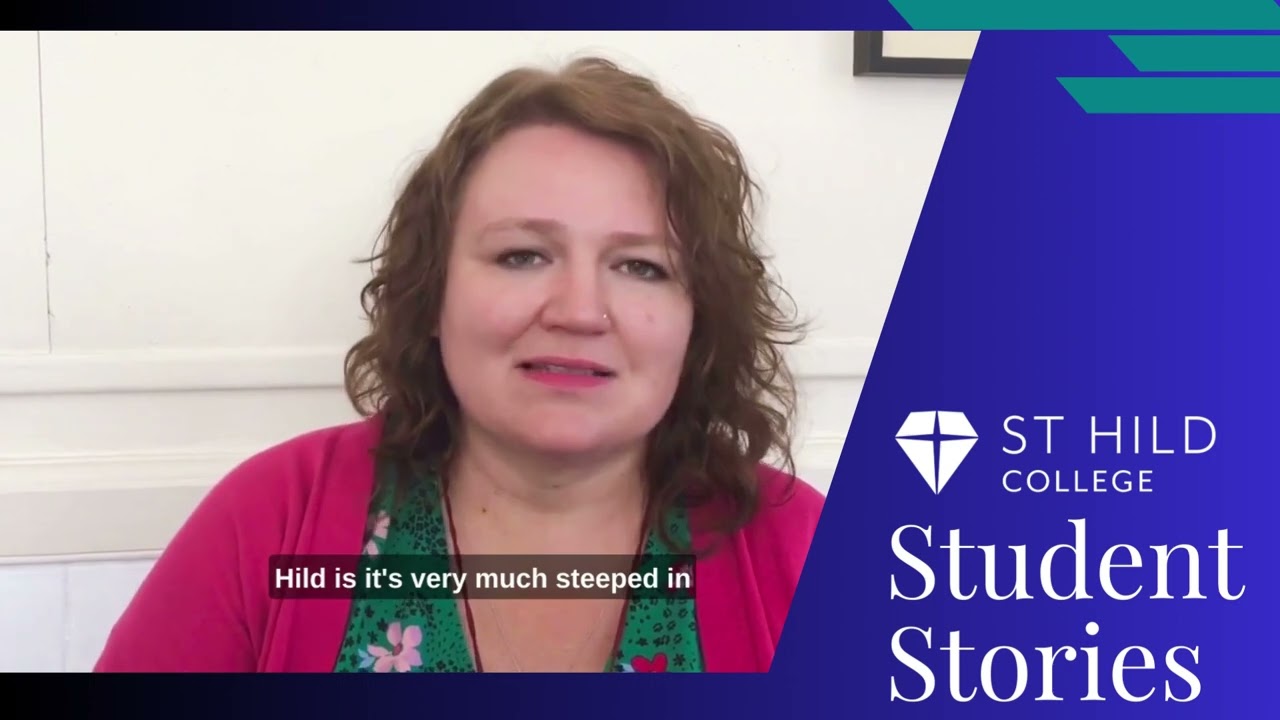
student sTory
Listen to Louise’s story, a St Hild alumna, who valued her time as a student and especially what she found in the community.
Explore other options
Click on a prospectus to open
What are my options?
Graduate Certificate (GCert)/Diploma (GDip)
in Theology, Ministry & Mission
Level 6
10-15 hours per week part-time; 30 hours + full-time, including class time and private study
1-2 years
These Graduate awards are designed for students who have already attained an undergraduate degree in another subject.
They aims to provide a select overview of the major disciplines of theology, ministry and mission with an emphasis on higher level modules.
The GCert involves 2-4 modules (totalling 60 credits) and is usually taken in 1 year; the GDip involves 5-8 modules (i.e. 120 credits) and is normally taken over 1-2 years.
Durham University validates the award. Higher-level graduates may go on to our MA programme. Further details about the Graduate Certificate and Graduate Diploma Award are available here.
Further information:
Assessment Information
Cert/Dip
Total credits overall
60/120
Level 6 credits (minimum)
Including at least 20 credits from either of these categories:
- Practice Ministry and Mission
- Theological Reflection and Reflective
40/80
Level 4 & 5 (maximum)
20/40
Module options include: Module options include: Biblical and Further Biblical Studies, Church History, Christian Doctrine, Mission and Evangelism, Church Planting, Ethics, Disability
Theology, Spirituality, Mission on the Margins, Worship, Chaplaincy, Leadership, and Reflective Practice. Language modules in Greek and Hebrew are also available.
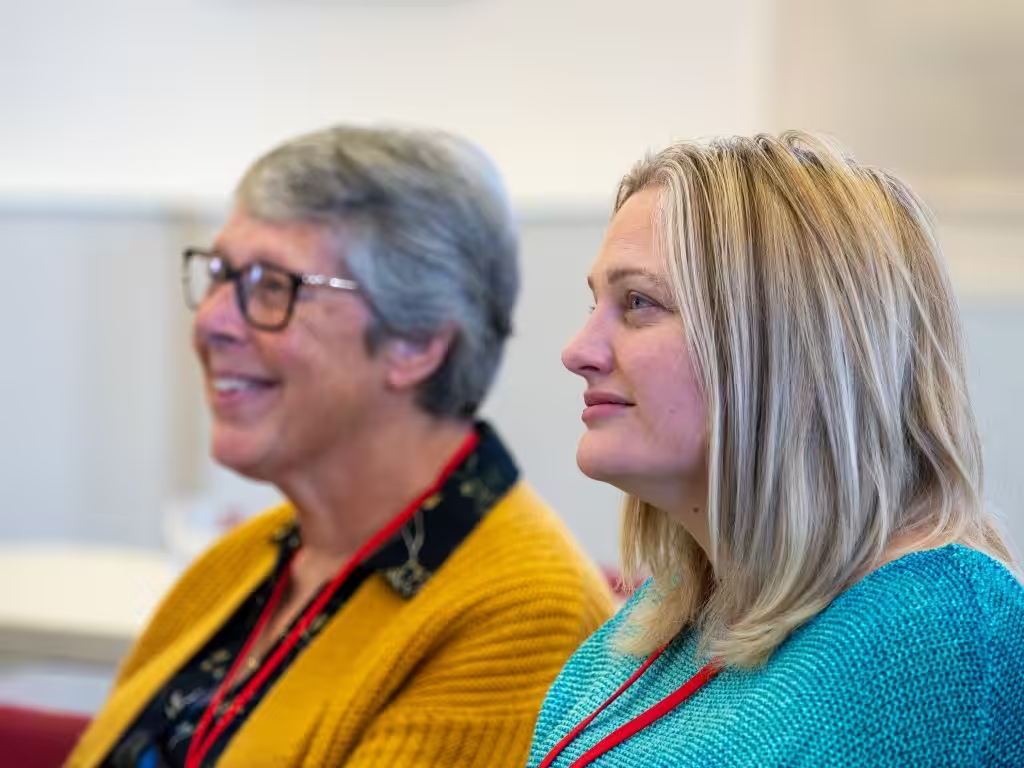
Ready to answer your calling?
Book a place on one of our Open Days and you’ll get an interview slot during the day to talk through the steps you’ll be taking and what options are available.
Postgraduate Certificate(PGCert)/Diploma (PGDip)
in Theology, Ministry & Mission
Level 7
10-15 hours per week part-time; 30 hours + full-time, including class time and private study
1-2 years
Our Postgraduate Certificate and Postgraduate Diploma programmes are designed to enable extensive exploration of selected theological disciplines in order to relate them well to contemporary ministry and mission.
Students can opt to specialise in leadership, church planting, spirituality, or biblical theology.
Durham University validates these awards. The Postgraduate Certificate (60 credits) can be extended to a Postgraduate Diploma (120 credits).
Students completing the Diploma can add a dissertation to achieve an MA. Further details about the award are available here (PG Certificate) and here (PG Diploma).
Assessment
- Most modules require two assignments of 3,000 words each or equivalent.
- Some modules are assessed by essays, others by a presentation, practical skill or written reflection on Christian practice.
Requirements
- Successful applicants will normally have an upper second-class honours degree, a Graduate Diploma or equivalent in theology.
- Graduates in other disciplines with experience of theology or religious studies to at least an undergraduate Certificate level (awarded with credit or distinction) may also be admitted to the programme.
- English language requirements: IELTS 7.0 (with no component under 6.5) or equivalent.
Further information:
Assessment Information
Cert/Dip
Total credits overall
60/120
Level 7 credits (minimum)
Required Module for PGDip:
TMM42220 Research and Reflection: Resources and Methods
40/90
Level 6 credits, or Level 4 & 5 biblical language modules (maximum)
20/30
Module options include: Issues in Biblical Theology, Advanced New Testament, Texts and Traditions in Christian Spirituality, Spirituality & Ministry, Rural Ministry, Christian Doctrine in Contemporary Culture, Advanced Church Planting in Perspective, Topic in Church History, Mission on the Margins, Ethics, Disability Theology, Leadership and Collaboration, Chaplaincy, Leadership and the Future Church and Reflective Practice. Language options in Greek and Hebrew are also available.
MA in Theology, Ministry and Mission
Level 7
10-15 hours per week part-time; 30 hours + full-time, including class time and private study
FT: 2 years | PT: 4 years
Our MA programme enables extensive exploration of selected theological disciplines in order to relate them well to contemporary ministry and mission.
Students can opt to specialise in leadership, church planting, spirituality, or biblical theology.
The award is validated by Durham University.
Assessment
- Most modules require two assignments of 3,000 words each, or equivalent.
- Some modules are assessed by essays, other by a presentation, practical skill or written reflection on Christian practice.
- The MA dissertation is overseen by an allocated supervisor in an area of interest.
Requirements
- Successful applicants will normally have an upper second-class honours degree, a Graduate Diploma or equivalent in theology.
- Graduates in other disciplines with experience of theology or religious studies to at least an undergraduate Certificate level (awarded with credit or distinction) may also be admitted to the programme.
- English language requirements: IELTS 7.0 (with no component under 6.5) or equivalent.
Further information:
Assessment information
Total credits overall
180
Level 7 modules (minimum)
Including required modules:
TMM42220 Research and Reflection: Resources and Methods
TMM42360 Dissertation in Theology, Ministry and Mission
120
Level 6 credits, or Level 4 & 5 biblical language modules (maximum)
30
Module options include: Issues in Biblical Theology, Advanced New Testament, Spirituality & Ministry, Rural Ministry and Mission, Christian Doctrine in Contemporary Culture, Advanced Church Planting in Perspective, Church History, Mission on the Margins, Ethics, Disability Theology, Leadership and Collaboration, Chaplaincy, Leadership and the Future Church and Reflective Practice.
Language options in Greek and Hebrew are also available.
MA in Contemporary Christian Leadership
Level 7
10-15 hours per week part-time; 30 hours + full-time, including class time and private study
Full Time: 2 years | PT: 3-4 years
Our MA in Contemporary Christian Leadership is designed to equip leaders for the future, with an emphasis on teamwork and collaboration, adaptive leadership and planting new congregations.
It is suitable for those developing in Christian leadership and for people seeking a mid-ministry refresher in skills and theology.
The MA can be completed alongside membership of our Tracks in Church Planting or Mission on the Margins.
The MA in Contemporary Christian Leadership is validated by Durham University (Common Awards) and includes specialist leadership modules alongside options from our highly commended postgraduate programme.
Assessment
- Most modules require two assignments of 3,000 words each or equivalent.
- Some modules are assessed by essays, others by a presentation, practical skill or written reflection on Christian practice.
- Candidates for the MA also complete a Dissertation in Leadership working alongside a St Hild academic tutor.
Requirements
- Successful applicants will normally have an upper second-class honours degree, Graduate Diploma or equivalent in theology.
- Graduates in other disciplines with experience of theology or religious studies to at least undergraduate Certificate level (awarded with credit or distinction) may also be admitted to the programme.
- English language requirements: IELTS 7.0 (with no component under 6.5) or equivalent.
Further information and programme specification:
Assessment information
Total credits overall
180
Level 7 required modules:
TMM42220 Research and Reflection: Resources and Methods
TMM42360 Dissertation in Christian Leadership
80
At least 3 modules from List A:
- Leadership and the future church
- Ecclesiology and conflict
- Reflective Practice: Leadership and Collaboration
- Advanced Church Planting in Perspective
- Leadership and Theology for Ministry and Mission
60
EITHER one further module from List A plus any Level 6 or 7, or Level 4 & 5 biblical language modules
OR Any Level 6 or 7, or Level 4 & 5 biblical language modules
40
Specialist modules for this award cover: Leadership and Collaboration, Leadership and the Future Church and Advanced Church Planting in Perspective. Additional module options cover a range of topics, including Issues in Biblical Theology, Advanced New Testament, Christian Doctrine in Contemporary Culture, Topic in Church History, Mission on the Margins, Ethics, Rural Ministry, Spirituality & Ministry, Disability Theology, Leadership and Collaboration, Chaplaincy, Leadership and the Future Church and Reflective Practice.
Language options in Greek and Hebrew are also available.
PhD
Level 8
10-20+ hours per week
Full Time: 3 years | PT: 6 years
We’re delighted to have taken the next step in our partnership with Durham University, making a PhD programme available to St Hild students from September 2026.
For details about the programme, see Durham’s PhD TEI partnership here.
If you would like to explore this with us, please email our Vice Principal, Janet Williams, here.
Assessment information
Dissertation
100,000 words maximum.
What are my options for study alongside an initial ministry post?
We support the completion of outstanding pre-ordination training modules, the upgrading of lower-level qualifications (such as a Dip HE or PG Dip) to a full BA or MA, and enrolment in new qualifications up to and including a PhD.
St Hild works in close partnership with the dioceses of Leeds, Lincoln, Sheffield and York, which offer additional support to curates undertaking further study. We also work to support Baptist ministers in their early years of ministry.
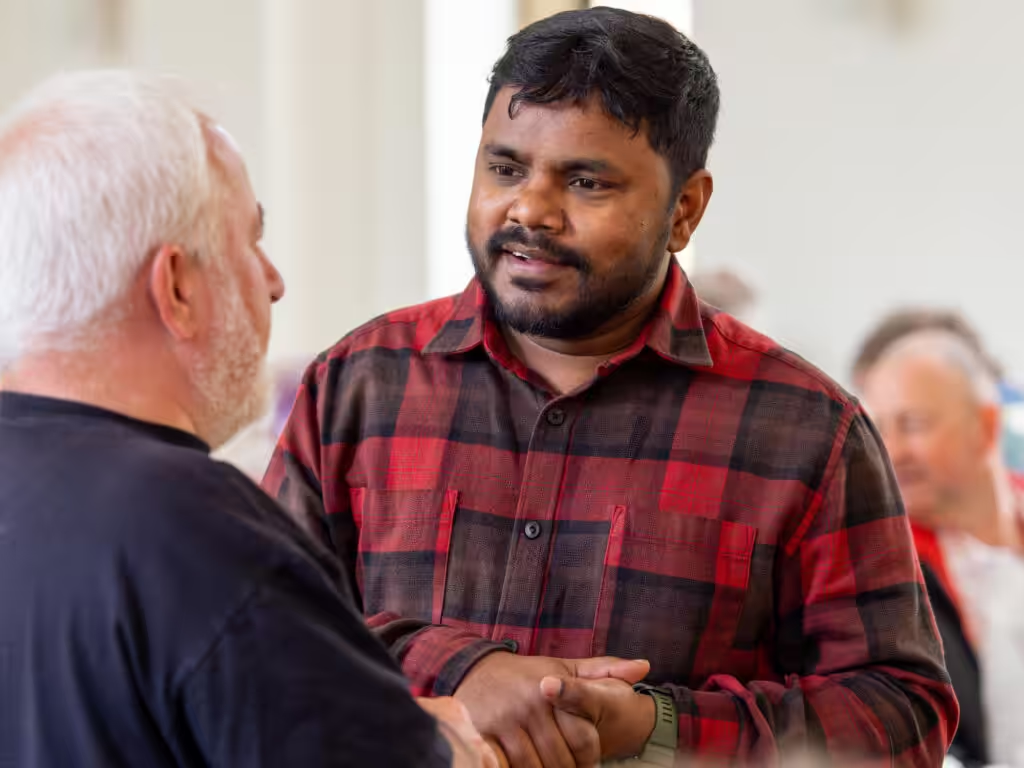
Is anything stopping you from applying?
We’ll help you figure it all out
Come and talk to us about special needs adjustments, options for grants and scholarships, and also childcare and travel concerns – we want you here and will find a way to help!