For those starting out in theological education with us, we offer a St Hild Certificate.
We also provide a full range of undergraduate qualifications through Durham University Common Awards which build from introductory study to a full BA (hons):
This guide contains a full list of our undergraduate modules (Level 4, Level 5 and Level 6) and Postgraduate modules (Level 7).
**Please note that the Prospectus is currently undergoing an update.
For those starting out in theological education with us, we offer a St Hild Certificate.
We also provide a full range of undergraduate qualifications through Durham University Common Awards which build from introductory study to a full BA (hons)
Available at Sheffield, Mirfield, Lincoln
Online study available
Foundation (Level 4), Certificate (Level 4), Diploma (Level 5), BA (Level 6)

what’s on this page?
A qualification tailored to your interests
We offer a range of pathways to suit your interests, but there is a lot of flexibility within our awards that we will talk through with you to make sure you’re studying subjects you are interested in, and are receiving an award that adequately reflects the topics you want to specialise in.
You can either:
- Choose one of the options on this page, and decide on any extra modules that are available as part of the course
- With our guidance, build your own award from the list of modules, and we will make sure you have all of the credits you need in order to gain a qualification in those subjects.
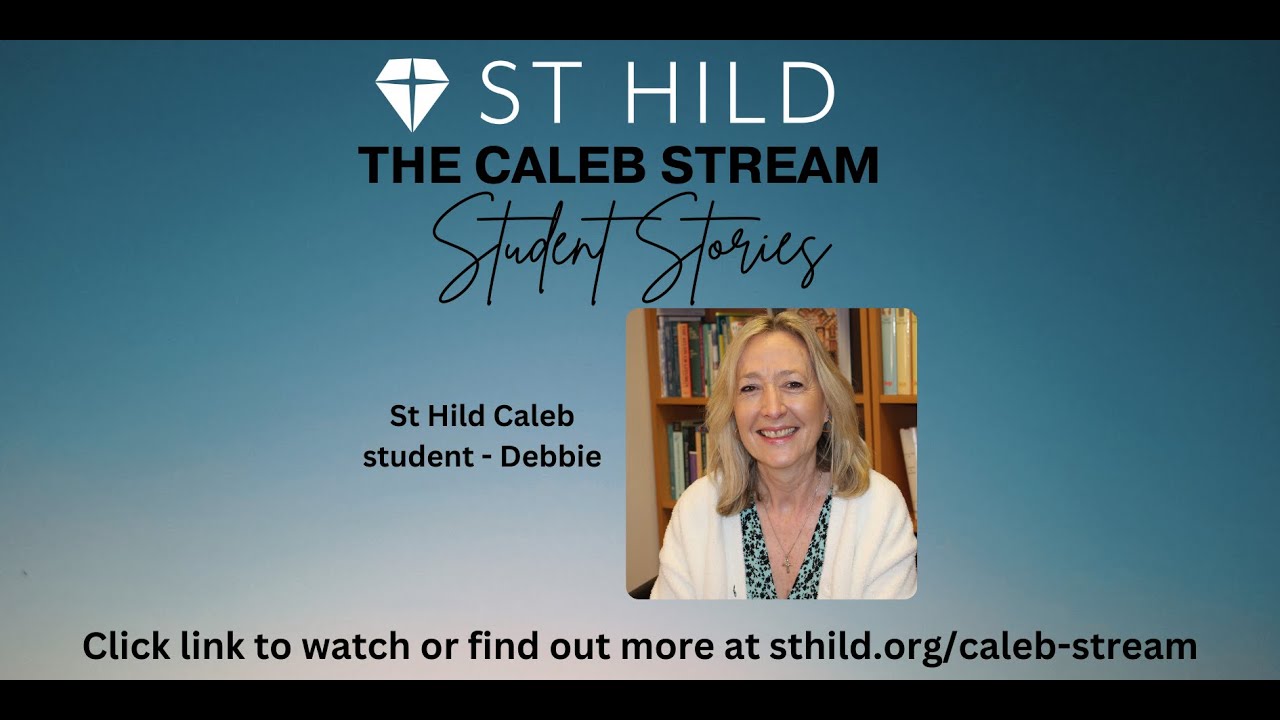
student sTory
Caleb Student Debbie talks about deep excitement on the journey to fulfil the call that had been on her life for years.
Explore other options
Click on a prospectus to open
What are my options?
St Hild Certificate
Over 3-6 years
How many hours per week?
The St Hild Certificate enables students to be recognised for studying with us in the most straightforward and financially accessible way.
It can be given in recognition of study equivalent to Foundation, Certificate or Diploma level, but which is assessed internally by St Hild academic staff. It is particularly appropriate for students wanting to try out academic study.
Assessment
- Each module requires two assignments of 2,500 words each or equivalent.
- Some modules are assessed by essays, others by a presentation or written reflection on Christian practice.
Requirements
- Normally a minimum of one A-level (at Grade E or above) or equivalent.
- However, for mature students, relevant work experience may be considered in lieu of formal academic qualifications.
- English language requirements: IELTS 6.5 (with no component under 6.0) or equivalent.
Please talk to us for more information about the St Hild Certificate
Assessment information
Total credits overall PLEASE EDIT
360
Level 6 required modules (minimum) PLEASE EDIT
80
Level 4 & 5 modules (maximum)=
270
Specialist modules for this award cover: Leadership and Collaboration, Leadership and the Future Church and Advanced Church Planting in Perspective.
Additional module options cover a range of topics including Issues in Biblical Theology, Advanced New Testament, Christian Doctrine in Contemporary Culture, Topic in Church History, Mission on the Margins, Ethics, Disability Theology, Leadership and Collaboration, Chaplaincy, Leadership and the Future Church and Reflective Practice.
Language options in Greek and Hebrew are also available.
Foundation Award
Over 1 year
How many hours per week?
The Foundation Award aims to provide a foundation for theological study by introducing some of the major subject areas of theology, ministry and mission.
It involves 3-4 modules (i.e., 60 credits) and is normally taken over 1 year.
The award is validated by Durham University. Students may build on the Foundation Award with a Certificate, Diploma or BA (Hons) through further study.
Assessment
Each module requires two assignments of 2,500 words each or equivalent. Some modules are assessed by essays, others by a presentation or written reflection on Christian practice.
Requirements
Normally a minimum of one A-level (at Grade E or above) or equivalent. However, for mature students, relevant work experience may be considered in lieu of formal academic qualifications. English language requirements: IELTS 6.5 (with no component under 6.0) or equivalent.
Further information and programme specification:
Assessment Information
Total credits overall (Level 4)
60
Module options include: Introduction to Old Testament, Introduction to New Testament, Church History, Christian Doctrine, Mission and Evangelism and Spirituality and Discipleship. Language modules in Greek and Hebrew are also available.
Certificate
Over 1-2 years
How many hours per week?
Level 4
The Certificate aims to provide a foundation for theological study by introducing the major subject areas of theology, ministry and mission.
It involves 6-8 modules (i.e. 120 credits) and is normally taken over 1-2 years.
The award is validated by Durham University. Students may build on the Certificate with a Diploma or BA (Hons) through further study.
Assessment
- Each module requires two assignments of 2,500 words each, or equivalent.
- Some modules are assessed by essays, others by a presentation or written reflection on Christian practice.
Requirements
Students are normally expected to have A-Level or equivalent qualifications, though previous informal study or Christian ministry may be taken into account.
Further information and programme specification:
Assessment Information
Total credits overall (Level 4)
Including at least 20 Credits from each of these categories:
- Biblical Studies
- Christian Tradition Ministry and Mission
At least 10 credits from:
- Theological Reflection and Reflective Practice
120
Module options include Introduction to Old Testament, Introduction to New Testament, Church History, Christian Doctrine, Mission and Evangelism, Spirituality and Discipleship, Preaching and Reflective Practice.
Language modules in Greek and Hebrew are also available.
Diploma
Over 2-4 years
How many hours per week?
The Diploma aims to provide a foundation for theological study and to deepen engagement with the major disciplines of theology, ministry and mission.
It involves 12-16 modules (i.e. 240 credits) and is normally taken over 2-4 years.
The award is validated by Durham University. Students may build on the Diploma with a BA (Hons) through further study.
Assessment
- Each module requires two assignments of 2,500 words each, or equivalent.
- Some modules are assessed by essays, others by a presentation or written reflection on Christian practice.
Requirements
- Normally a minimum of two A-levels (at Grade E or above) or equivalent.
- However, for mature students, relevant work experience may be considered in lieu of formal academic qualifications.
- English language requirements: IELTS 6.5 (with no component under 6.0) or equivalent.
At Level 4 students are introduced to the core areas of subject specific knowledge, namely biblical studies, the Christian tradition and ministerial theology.
At level 5 students study the core subject areas at greater depth. The depth of study may take the form of a more focused area of subject specific knowledge and/or a more deeply contextual approach to an area of subject specific knowledge.
Further information and programme specification:
Assessment information
Total credits overall
240
Level 5 modules (minimum)
At least 20 Credits from each of these categories:
- Biblical Studies
- Christian Tradition
- Ministry and Mission
At least 10 credits from the category:
- Theological Reflection and Reflective Practice
90
Level 4 modules (maximum)
At least 20 Credits from each of these categories:
- Biblical Studies
- Christian Tradition
- Ministry and Mission
At least 10 credits from the category:
Theological Reflection and Reflective Practice
150
Module options include: Introduction to Old Testament, Introduction to New Testament, Bible in Context, Church History, Christian Doctrine, Mission and Evangelism, Faith and the Environment, Mission Entrepreneurship, Spirituality and Discipleship, Preaching and Reflective Practice.
Language options in Greek and Hebrew are also available.
BA
Over 3-6 years
How many hours per week?
The BA (Hons) degree aims to provide a full induction into theological study, covering the major disciplines of theology, ministry and mission and beginning to integrate their insights.
SAY SOMETHING ABOUT SPECIALIST AREAS & MODULES? Might be a draw for some people and currently it’s hidden in the module options
It involves 18-22 modules (i.e. 360 credits) and is normally taken over 3-6 years.
The award is validated by Durham University.
Higher level BA (Hons) graduates may go on to our MA programme.
Assessment
- Most modules requires two assignments of 2,500 words each, or equivalent.
- Some modules are assessed by essays, other by a presentation or written reflection on Christian practice.
- The BA (Hons) includes an extended study project or supervised dissertation in an agreed subject area.
Requirements
- Normally a minimum of two A-levels (at Grade E or above) or equivalent.
- However, for mature students, relevant work experience may be considered in lieu of formal academic qualifications.
- English language requirements: IELTS 7.0 (with no component under 6.5) or equivalent.
Further information and programme specification:
Assessment information
Total credits overall
360
Level 6 required modules (minimum)
At least 20 Credits from this list of modules:
- TMM3341 – Independent Learning Project (long)
- * TMM3352 – Extended Project in Theology, Ministry and Mission
- * TMM3362 – Dissertation in Theology, Ministry and Mission
*may include Level 4 language modules taken as part of the Level 6 lower-level credit allowance.
80
Level 4 & 5 modules (maximum)
For both levels, at least 20 Credits from each of these categories:
- Biblical Studies
- Christian Tradition
- Ministry and Mission
At least 10 Credits from:
- Theological Reflection and Reflective Practice
270
Specialist modules for this award cover: Leadership and Collaboration, Leadership and the Future Church and Advanced Church Planting in Perspective.
Additional module options cover a range of topics including Issues in Biblical Theology, Advanced New Testament, Christian Doctrine in Contemporary Culture, Topic in Church History, Mission on the Margins, Ethics, Disability Theology, Leadership and Collaboration, Chaplaincy, Leadership and the Future Church and Reflective Practice.
Language options in Greek and Hebrew are also available.

Is anything stopping you from applying?
We’ll help you figure it all out
Come and talk to us about special needs adjustments, options for grants and scholarships, and also childcare and travel concerns – we want you here and will find a way to help!