
The College of the Resurrection (Mirfield) and St Hild College are pleased to partner in jointly offering a Residential Contextual Pathway.
Mirfield will contribute its residential setting, formational community, patterns of prayer and common life whilst St Hild brings its experience of contextual training, expertise in church planting/revitalisation and breadth of the student body.
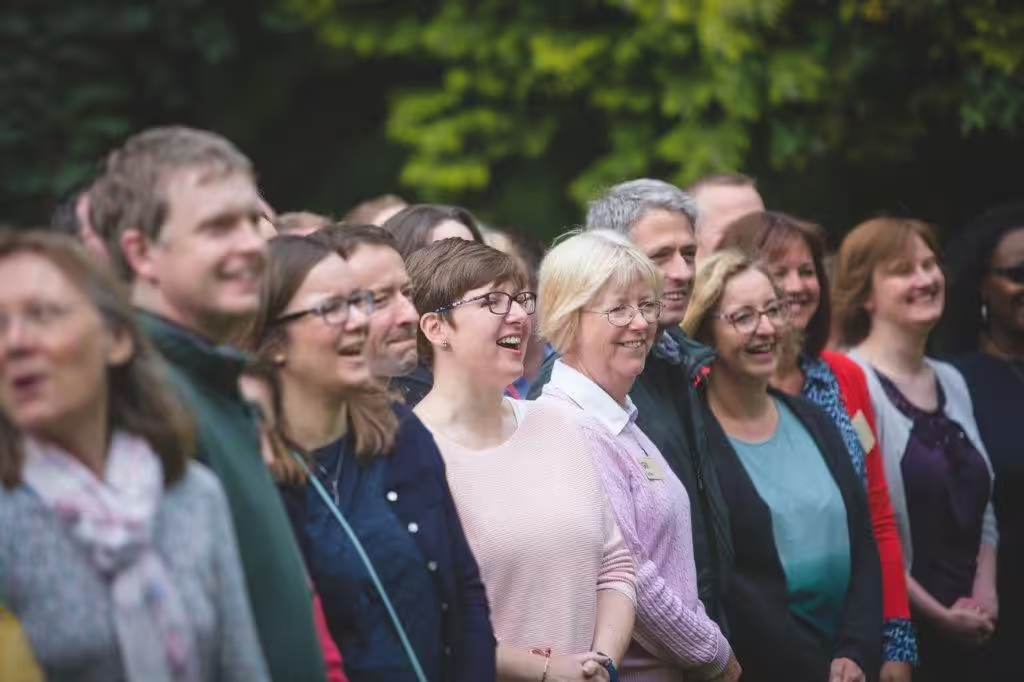
Full time residential, 20 hours per week study & 16 hours per week in a missional placement context
1-2 years
Any sessions online?

what’s on this page?
Residential training with the College of the Resurrection offers a deeply rooted formational experience of community life at the home of the Community of the Resurrection in Mirfield.
Mirfield will contribute its residential setting, formational community, patterns of prayer and common life whilst St Hild brings its experience of contextual training, expertise in church planting/revitalisation and breadth of the student body.
Ordinands will be registered at the College of the Resurrection Mirfield, which will take overall responsibility for their formation, but their contextual training and much of their academic work, usually leading to a University of Durham Common Awards qualification, will be overseen by St Hild.
Key strengths of this pathway include:
- An active and practice-based approach, being formed as a fully active and empowered member of a community of missional learners, in a wide range of church contexts
- Be formed by a rhythm of learning and prayer, growing deep spiritual roots to sustain you through times of change and challenge
- Growing the character and skills that support future mission and ministry
- Learning in a way that is applied to local contexts, so you can make new connections and reach your academic potential
- Share in the unique breadth of
- Church traditions represented across our two Colleges, learning alongside those called to different patterns of lay and ordained ministry
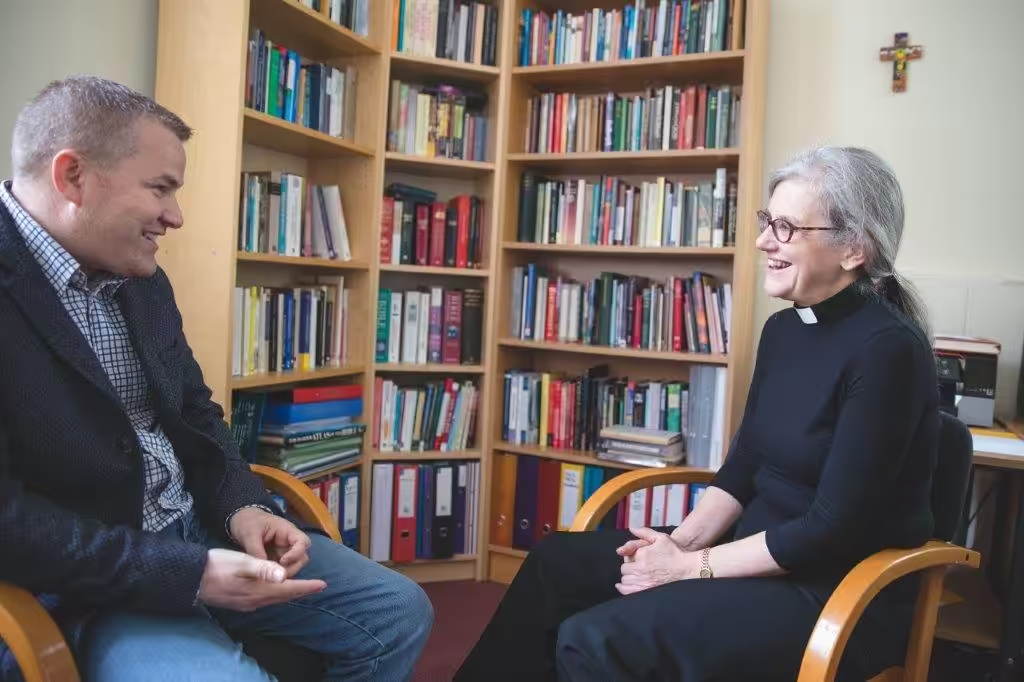
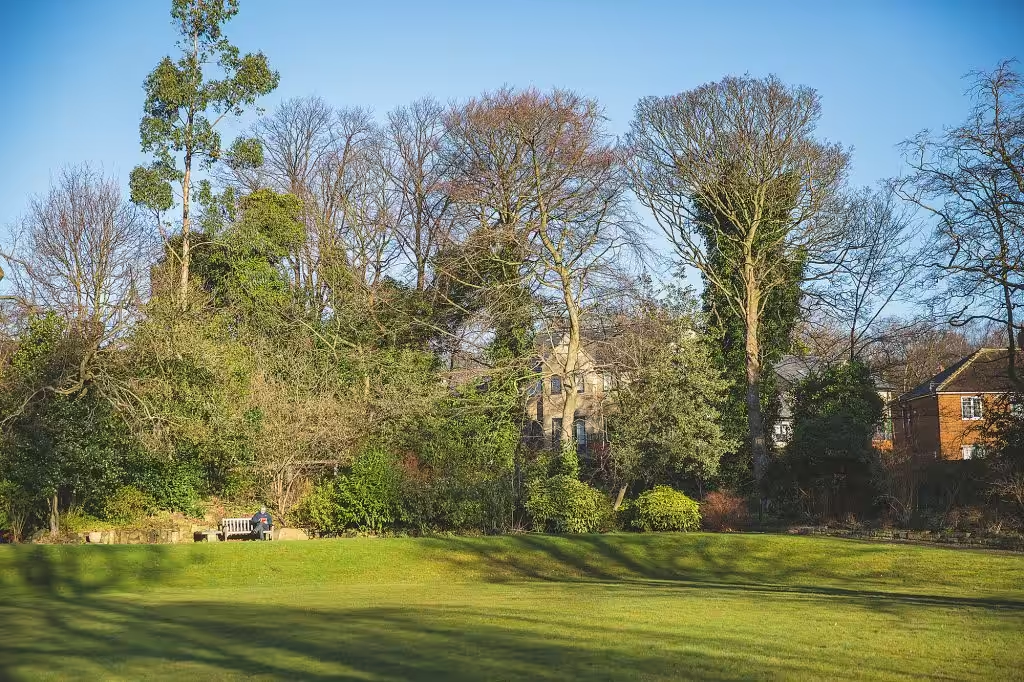
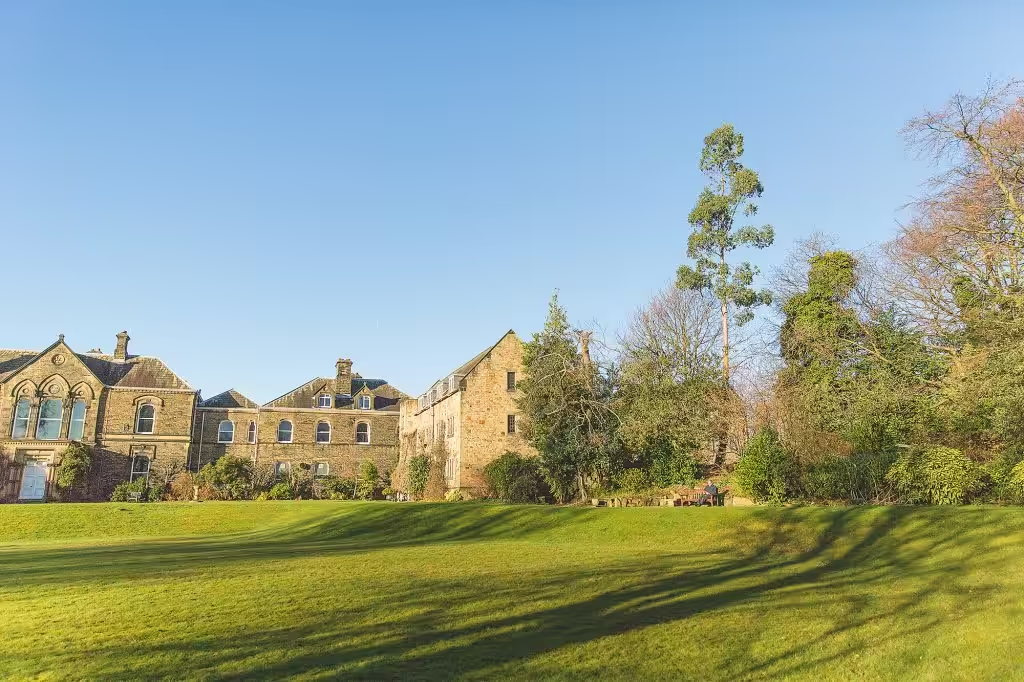
Residing in Mirfield on a beautiful site hallowed by rhythms of monastic life for over a century while learning-in-practice in a local parish context really will be getting the best of both worlds: deep spiritual roots and breadth of missional experience.”
Revd Dr Janet Williams
What is the focus of Mirfield residential contextual?
Mission
Ordinands on this pathway are engaged with mission in a local context for 16 hours per week developing new ministry alongside an experienced practitioner, supported by regular group reflection time.
Study
Ordinands study at St Hild Mirfield and alongside other students in the College of the Resurrection on an academic pathway designed around their academic needs and interests.
This pathway involves study for 20 hours each week with additional academic time possible, depending on the individual study pathway.
Prayer
Ordinands on this pathway are members of the College of the Resurrection community, fully engaged in its rhythms of prayer, service and reflection.
The Formation Experience
Term-time residence in Mirfield: CoR accommodation is provided, including
- Weekly study on a Wednesday night with St Hild in Mirfield, some Saturday study days (with additional time off in the week to compensate) and dedicated study time during the week.
- The availability of family accommodation for married students;
- A rhythm of regular worship and prayer with other CoR students;
- Normally 16 hours per week in a missional placement context within convenient travelling distance from Mirfield;
- Weekly study on a Wednesday night with St Hild in Mirfield, some Saturday study days (with additional time off in the week to compensate) and dedicated study time during the week.
student stories
Professor Albert Ong tells his journey pursuing ordination.
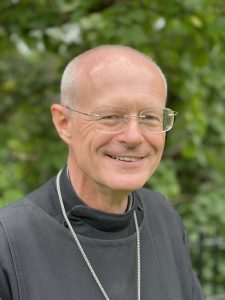
The College of The Resurrection is delighted to be working with St Hild College to offer a single ordination pathway that weaves together some of the distinctive strengths of the two colleges. Our rhythm of life and regular worship has a well established reputation for producing priests with a resilient commitment to community, prayer and service. We now welcome into this pattern of formation those who have also chosen to train through St Hild’s established pattern of contextual learning.”
Rt Revd Mark Sowerby
Practical Questions
You will be able to ask anything you want in the interview, but here are some answers to questions our prospective student often ask:
Which college will I belong to?
Students on this pathway will be members of both Colleges:
The College of the Resurrection (CoR) provides:
- Accommodation The College of the Resurrection (CoR) will be your primary home – literally, as you will live there, and metaphorically, in that your Diocese will count you as a ‘CoR ordinand’;
- Community You will take a full part in the life of the CoR community, including worship and prayer.
- Support CoR staff will provide overall formational and tutorial support, including additional short-term placements.
St Hild provides:
Classes & workshops: Most of your classes will be with St Hild, including some weekend workshops and monthly meetings with other full-time contextual students to reflect together and share your learning.
Contextual placement & Academic Studies: St Hild will provide and oversee your contextual placement and your academic studies, which will normally include a programme of study towards a Durham University award in Theology, Ministry and Mission: the university will count you as a ‘St Hild student’.
How will I manage the competing demands of belonging to two Colleges alongside a commitment to my placement context?
- In a typical week in term-time you will spend the equivalent of two full days in context, including Sunday services;
- you will the equivalent of two full days set aside for classes and private studies;
- the remainder of the week will afford space for worship, CoR community life, and rest and relaxation.
- Outside of term-time you will be free from commitment to your contextual placement, and may choose to return to your home base.
- Where appropriate and helpful to you, there may be one or more short-term placements for you to undertake outside term-time: these will be discussed with you and overseen by the CoR staff team.
- This pathway will require you to be adept at moving between quite different cultures, but you will be treading a path pioneered by others, and supported by staff and peers in both colleges. We know that it can work well for the right candidates.
What do you offer for students requiring additional learning support?
- As a CoR student, you and any accompanying family will have access to all the pastoral and practical support of the Mirfield community.
- You will belong to a CoR tutorial and prayer group.
- As a member of the St Hild Full-Time Contextual Pathway, you will be supported by our Mirfield Contextual Tutor who will oversee the arrangement and ongoing review of your context.
- You will also join a monthly peer-group meeting for reflection on contextual learning.
- In your context, you will have a placement supervisor who is responsible for ensuring that you are given opportunities for effective learning and growth, and regular theological reflection.
- The local context is also a place of community and support for ordinands and, where appropriate, their families.
- In our experience, full-time contextual students grow significantly in their capacity to manage complexity, connect with support structures, and flourish in a local context – all of this prepares them well for curacy and future ministry.
Who is this suitable for?
This form of training is suitable for all ordinands who can be considered for residential training; it will be especially attractive for those seeking to combine the experience of the structured spiritual life of Mirfield, with the missional training available in a full-time context.
What exactly will I study?
- Your academic programme of study will be decided by St Hild in conversation with you.
- We do not have a ‘one size fits all’ study programme, but will work to identify the best route for you based on your prior study and experience, the nature of your vocation, and in response to any particular training needs identified at BAP.
- You might study towards an undergraduate, graduate or post-graduate award over two or three years, completing anything from the Common Awards suite which includes the Higher Education Diploma, BA, Graduate or Post-Graduate Diploma, or MA. See Durham Common Awards here
- Whatever your academic programme, a significant portion of it will relate to reflecting on what you are learning through experience, both in your placement/s and in the shared life of worship and prayer.
- More traditional academic studies will include modules in biblical study, church tradition (including worship and doctrine), and ministry and mission.
- Studies are organised in modules which carry ten or twenty credits; the typical programme of study is made up of between 80 and 120 credits per academic year.
- The majority of your classes will be with St Hild, but we aim to identify one or two modules a year that you can take alongside CoR students.
- For students requiring additional learning support, additional study time can be provided.
What support is there for me and my family?
- The local context is also a place of community and support for ordinands and, where appropriate, their families. In our experience, full-time contextual students grow significantly in their capacity to manage complexity, connect with support structures, and flourish in a local context – all of this prepares them well for curacy and future ministry.
- As a CoR student, you and any accompanying family will have access to all the pastoral and practical support of the Mirfield community.
- You will belong to a CoR tutorial and prayer group.
- As a member of the St Hild Full-Time Contextual Pathway, you will be supported by our Mirfield Contextual Tutor who will oversee the arrangement and ongoing review of your context.
- You will also join a monthly peer-group meeting for reflection on contextual learning.
- In your context, you will have a placement supervisor who is responsible for ensuring that you are given opportunities for effective learning and growth, and regular theological reflection.
How does the process work?
St Hild Autumn & Winter
2025/26 Open Days
Sheffield
Monday
20 Oct
Monday
26 Jan 2026
Mirfield
Wednesday
12 Nov
Wednesday
14 Feb 2026
Lincoln
Saturday
24 Jan 2026
Online
Thursday
12 Feb 2026
If none of our planned dates works for you, please get in touch at enquiries@sthild.org and we’ll be happy to arrange a time that does.
Prospectus image 1
Prospectus image 2
explore your options
Durham-accredited Awards
We have a large diversity of awards, courses and pathways to study at St Hild, and it can be confusing trying to work out which one is right for you.Below are the different options for Anglican Formation, with information you may find helpful for making that step, but we encourage you to Book a Conversation…
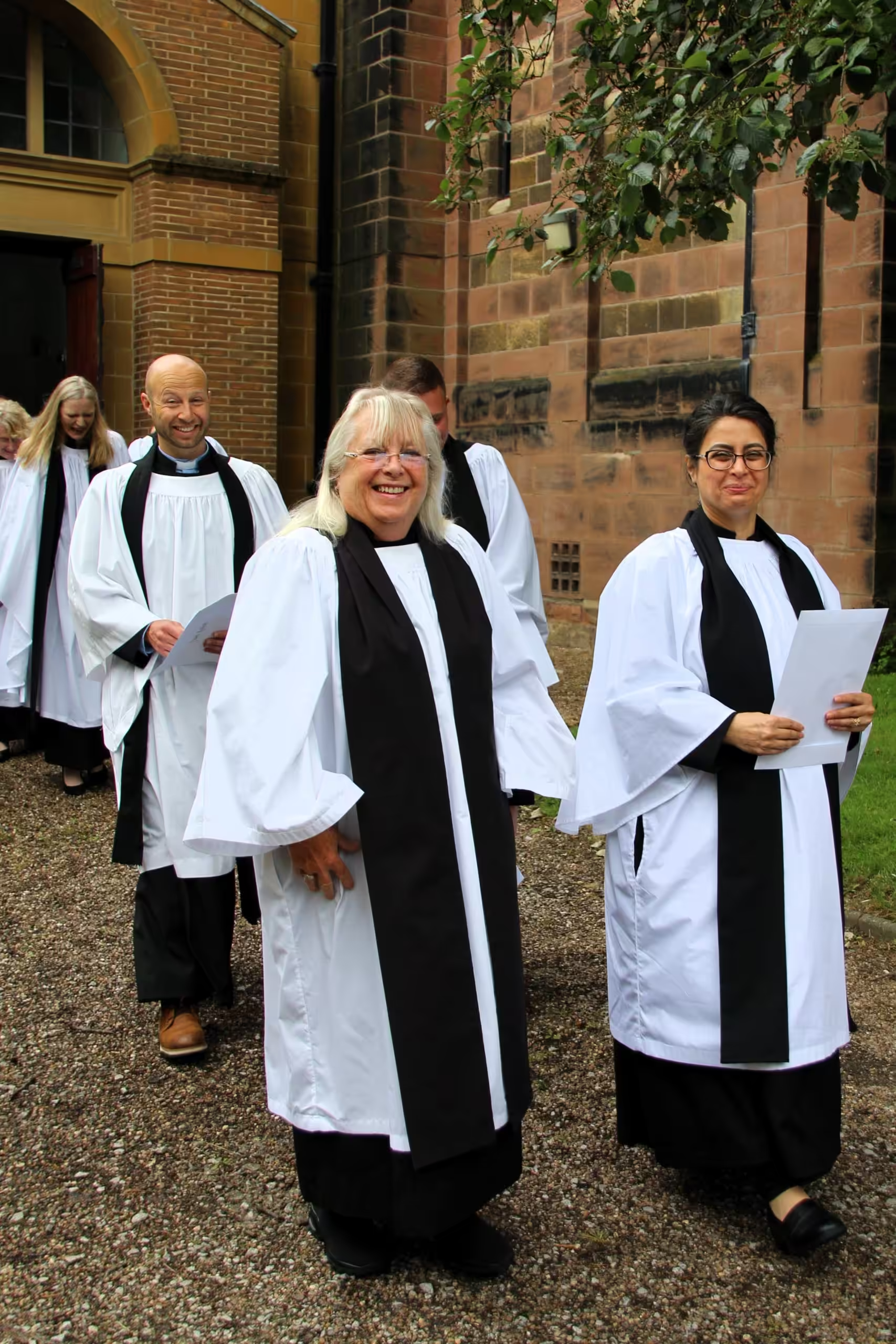
Anglican Ordination
Our study pathways are flexible in order to work alongside contextual experience.
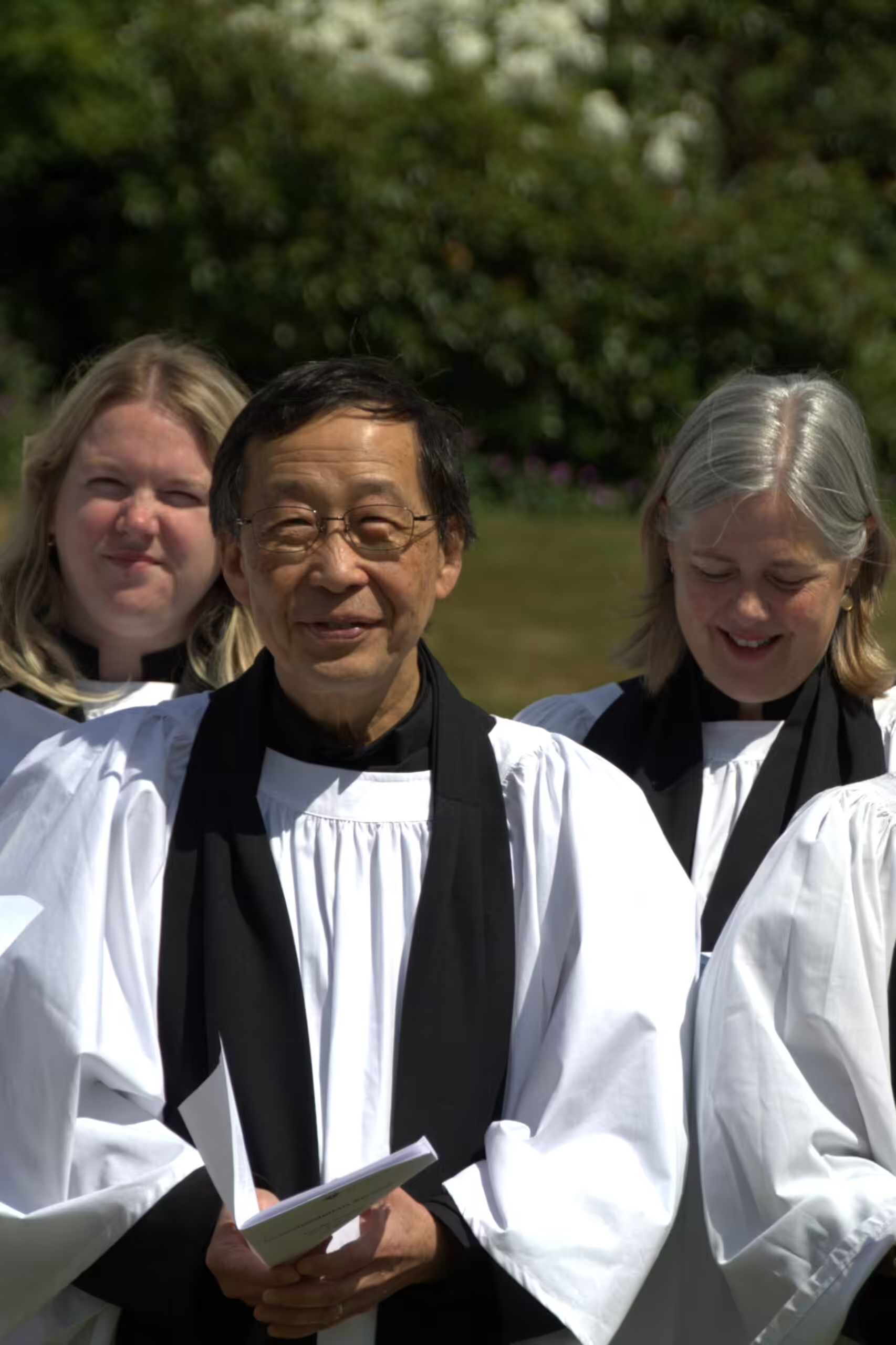
The Elizabeth Pathway
The Elizabeth Pathway is a new Anglican ordination training pathway for older, experienced lay leaders.
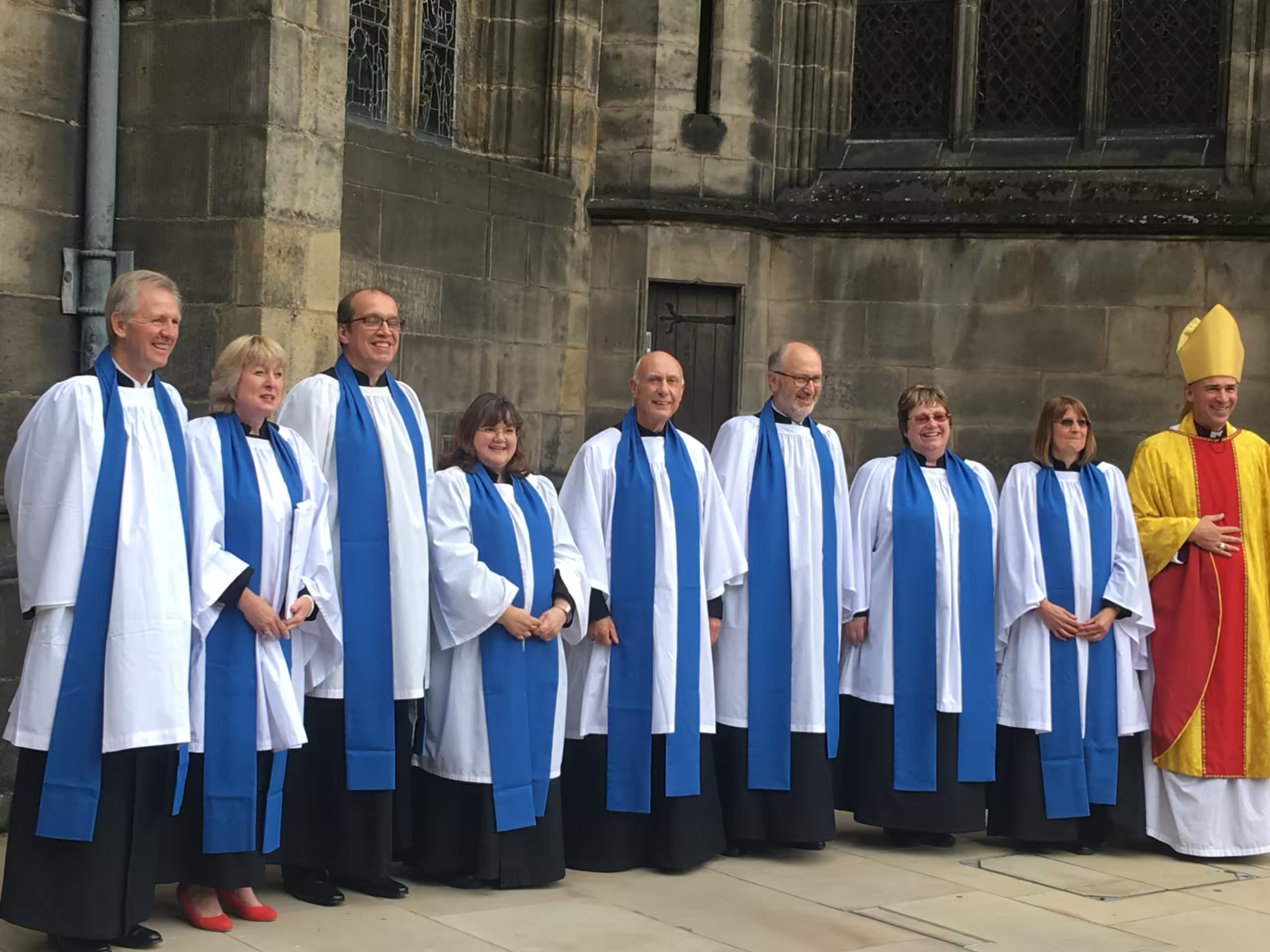
Licensed Lay Training
Training for those who feel called to Licensed Reader Ministry within the Church of England
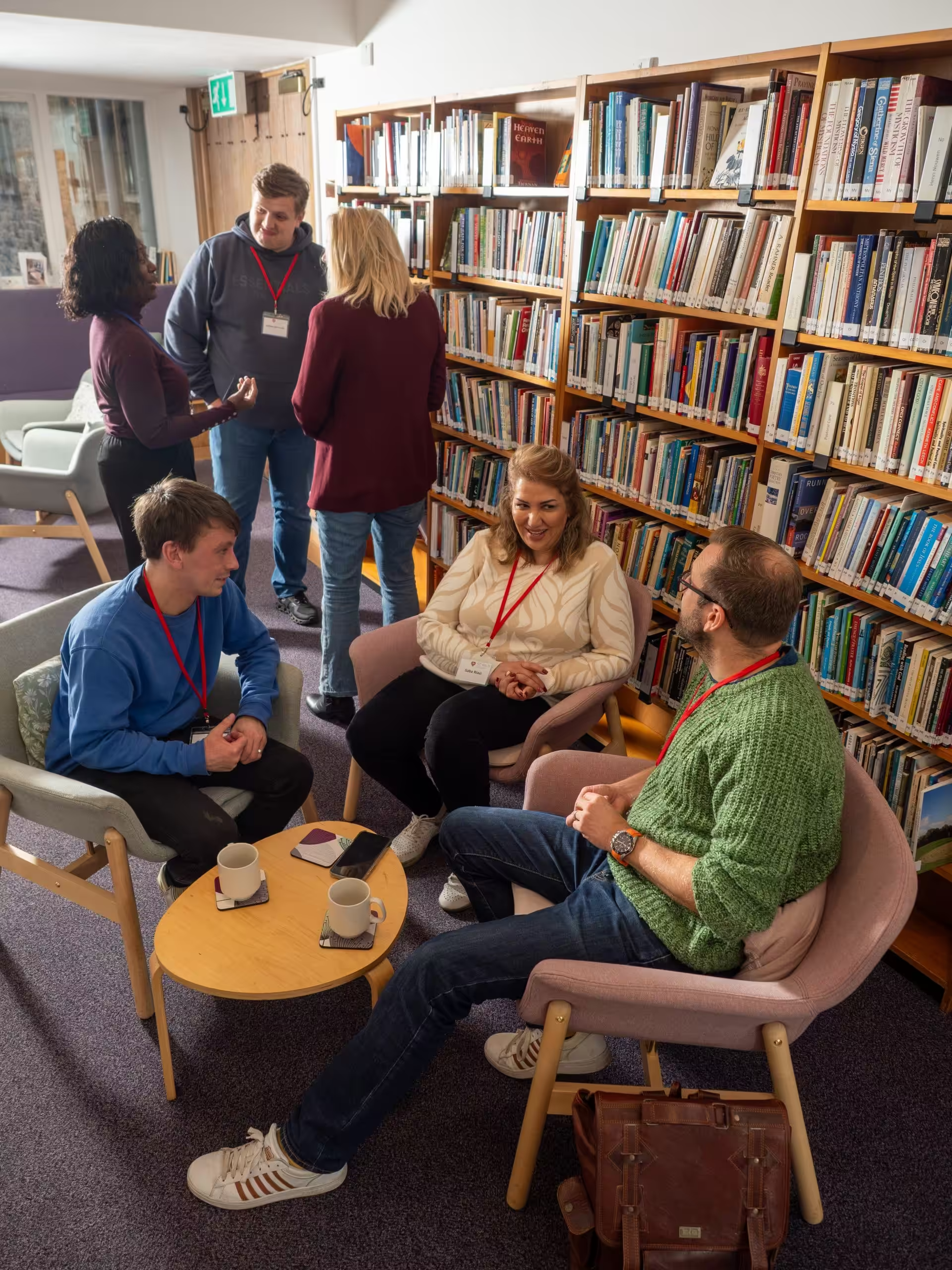
Alternative Learning Pathways
Our study pathways are flexible in order to work alongside contextual experience.