
We have a large array of awards, courses and pathways to study at St Hild, and it can be confusing trying to work out which one is right for you.
We encourage you to browse this page and read more about our different options, but most importantly we we encourage you to Book a Conversation so that we can talk about the best options for you.
Available at St Hild Sheffield
20 hours per week
1-2 years
Ordination
Some sessions online
Visit Centre Landing Page
what’s on this page?
Why Train Contextually with St Hild?
Key strengths of full-time contextual training include:
- Grow the character and skills that support future mission and ministry.
- Be formed by a rhythm of teaching and practice inspired by New Testament learning patterns on mission, and well-suited to further in-service learning.
- Experience formation as a fully active and empowered learner alongside others.
- Build a relational network that can support future mission and church planting.
- Study the same level and pace as residential training with a high-quality St Hild academic team.
- Learn in a way which is applied to local contexts, so you can make new connections and reach your academic potential.
- Build foundations which can be developed through lifelong learning, or on our theological educator pathway.
- Share in the unique breadth and character of the St Hild community, drawing together Church traditions, ages, types of training (full-time and part-time together) and learning alongside other denominations.
- Join in residential times at the Mirfield home of the Community of the Resurrection.
explore another pathway:
What is the focus of contextual training?
Mission
Every St Hild ordinand is engaged with mission in a local context.
Contexts vary depending on whether you are Full time, Part time or Residential (click on links to find out more about these).
Study
Ordinands are based at St Hild Mirfield, St Hild Sheffield, St Hild Lincoln or St Hild Online for weekly study.
Prayer
Our ordinand community gathers each year for six residential weekends at Mirfield and one Easter week at Durham.
This is crucial formational time for worship, prayer, shared meals, study and retreat.
Ordinands journey through training as part of a Prayer Group for mutual accountability and personal growth.
All ordinands are encouraged to have a spiritual director.
student stories
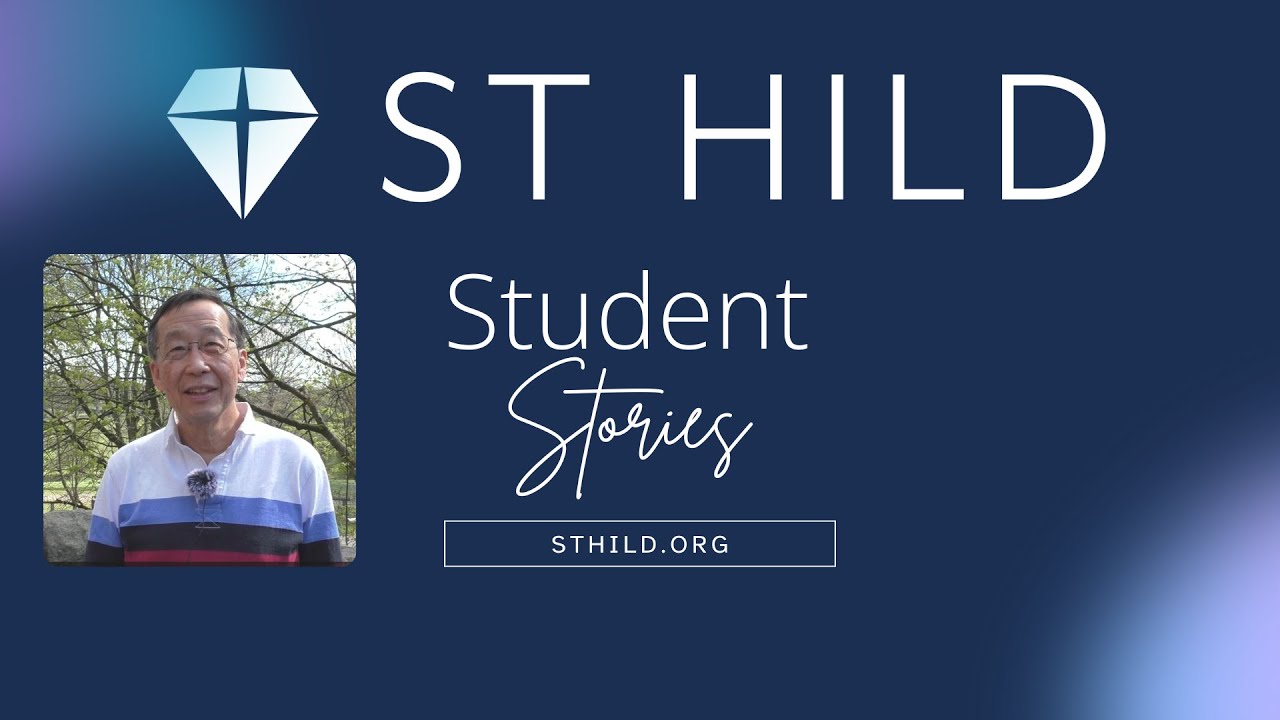
Professor Albert Ong tells his journey pursuing ordination.
Title of variation or award
Any subheading or subtitle
Which level?
FT: ? years | PT: ? years
How many hours per week?
Introduction paragraph here
Assessment
- EDIT THESE Most modules require two assignments of 3,000 words each, or equivalent.
- Some modules are assessed by essays, other by a presentation, practical skill or written reflection on Christian practice.
- The MA dissertation is overseen by an allocated supervisor in an area of interest.
Requirements
- EDIT THESESuccessful applicants will normally have an upper second-class honours degree, Graduate Diploma or equivalent in theology.
- Graduates in other disciplines with experience of theology or religious studies to at least undergraduate Certificate level (awarded with credit or distinction) may also be admitted to the programme.
- English language requirements: IELTS 7.0 (with no component under 6.5) or equivalent.
For further information:
Assessment information
Total credits overall EDIT
180
Level 7 modules (minimum) EDIT
Including required modules:
TMM42220 Research and Reflection: Resources and Methods
TMM42360 Dissertation in Theology, Ministry and Mission
120
Level 6 credits, or Level 4 EDIT & 5 biblical language modules (maximum)
30
Module options include: Issues in Biblical Theology, Advanced New Testament, Christian Doctrine in Contemporary Culture, Advanced Church Planting in Perspective, Topic in Church History, Mission on the Margins, Ethics, Disability Theology, Leadership and Collaboration, Chaplaincy, Leadership and the Future Church and Reflective Practice.
Language options in Greek and Hebrew are also available.
Title of variation or award
Any subheading or subtitle
Which level?
FT: ? years | PT: ? years
How many hours per week?
Introduction paragraph here
Assessment
- EDIT THESE Most modules require two assignments of 3,000 words each, or equivalent.
- Some modules are assessed by essays, other by a presentation, practical skill or written reflection on Christian practice.
- The MA dissertation is overseen by an allocated supervisor in an area of interest.
Requirements
- EDIT THESESuccessful applicants will normally have an upper second-class honours degree, Graduate Diploma or equivalent in theology.
- Graduates in other disciplines with experience of theology or religious studies to at least undergraduate Certificate level (awarded with credit or distinction) may also be admitted to the programme.
- English language requirements: IELTS 7.0 (with no component under 6.5) or equivalent.
For further information:
Assessment information
Total credits overall EDIT
180
Level 7 modules (minimum) EDIT
Including required modules:
TMM42220 Research and Reflection: Resources and Methods
TMM42360 Dissertation in Theology, Ministry and Mission
120
Level 6 credits, or Level 4 EDIT & 5 biblical language modules (maximum)
30
Module options include: Issues in Biblical Theology, Advanced New Testament, Christian Doctrine in Contemporary Culture, Advanced Church Planting in Perspective, Topic in Church History, Mission on the Margins, Ethics, Disability Theology, Leadership and Collaboration, Chaplaincy, Leadership and the Future Church and Reflective Practice.
Language options in Greek and Hebrew are also available.
Frequently Asked Questions (FAQs)
You will be able to ask anything you want in the interview, but here are some answers to questions our prospective student often ask:
What exactly will I study?
- Your academic programme of study will be decided by St Hild in conversation with you.
- We do not have a ‘one size fits all’ study programme but will work to identify the best route for you based on your prior study and experience, the nature of your vocation, and in response to any particular training needs identified.
- You might study towards an undergraduate, graduate or post-graduate award over two or three years, completing anything from the Common Awards suite which includes the Higher Education Diploma, BA, Graduate or Post-Graduate Diploma, or MA. See Durham Common Awards here.
- Whatever your academic programme, a significant portion of it will relate to reflecting on what you are learning through experience, both in your placement/s and in the shared life of worship and prayer.
- More traditional academic studies will include modules in biblical study, church tradition (including worship and doctrine), and ministry and mission.
- Studies are organised in modules which carry ten or twenty credits; the typical programme of study is made up of between 80 and 120 credits per academic year.
- .
Question
Answer
Question
Answer
What do you offer for students requiring additional learning support?
For students requiring additional learning support, additional study time can be provided.
Answer
Question
Answer