
We have a large array of awards, courses and pathways to study at St Hild, and it can be confusing trying to work out which one is right for you.
We encourage you to browse this page and read more about our different options, but most importantly we we encourage you to Book a Conversation so that we can talk about the best options for you.
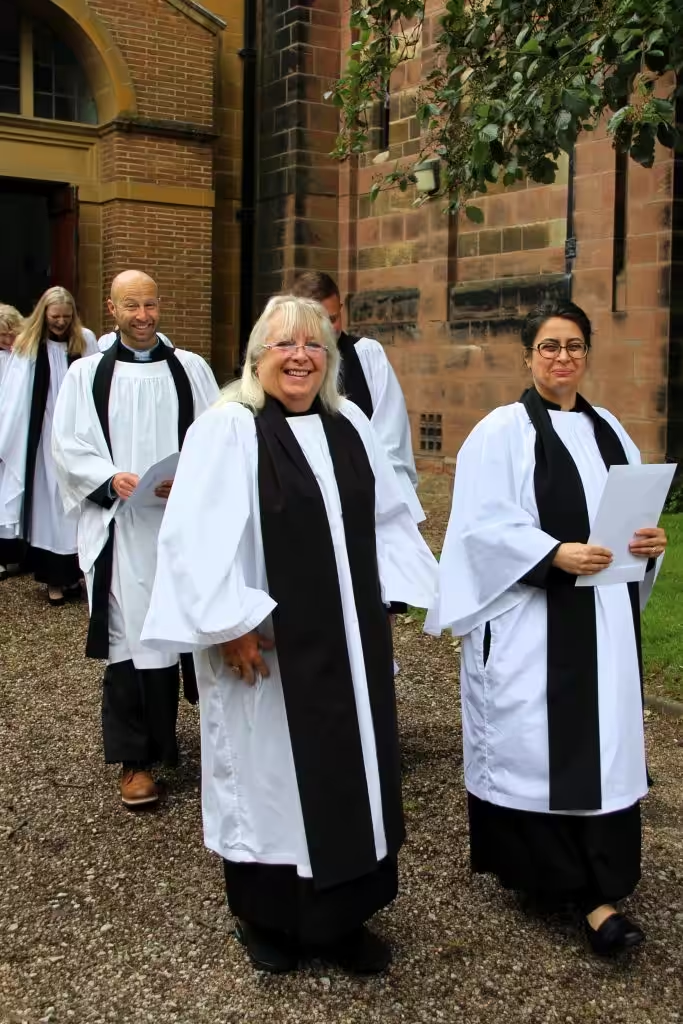
Available at Sheffield, Mirfield, Lincoln & Online
Varies: see individual types
1-2 years
Ordination
Some sessions online

what’s on this page?
Why Train Contextually with St Hild?
Key strengths of full-time contextual training include:
- Grow the character and skills that support future mission and ministry.
- Be formed by a rhythm of teaching and practice inspired by New Testament learning patterns on mission, and well-suited to further in-service learning.
- Experience formation as a fully active and empowered learner alongside others.
- Build a relational network that can support future mission and church planting.
- Study the same level and pace as residential training with a high-quality St Hild academic team.
- Learn in a way which is applied to local contexts, so you can make new connections and reach your academic potential.
- Build foundations which can be developed through lifelong learning, or on our theological educator pathway.
- Share in the unique breadth and character of the St Hild community, drawing together Church traditions, ages, types of training (full-time and part-time together) and learning alongside other denominations.
- Join in residential times at the Mirfield home of the Community of the Resurrection.
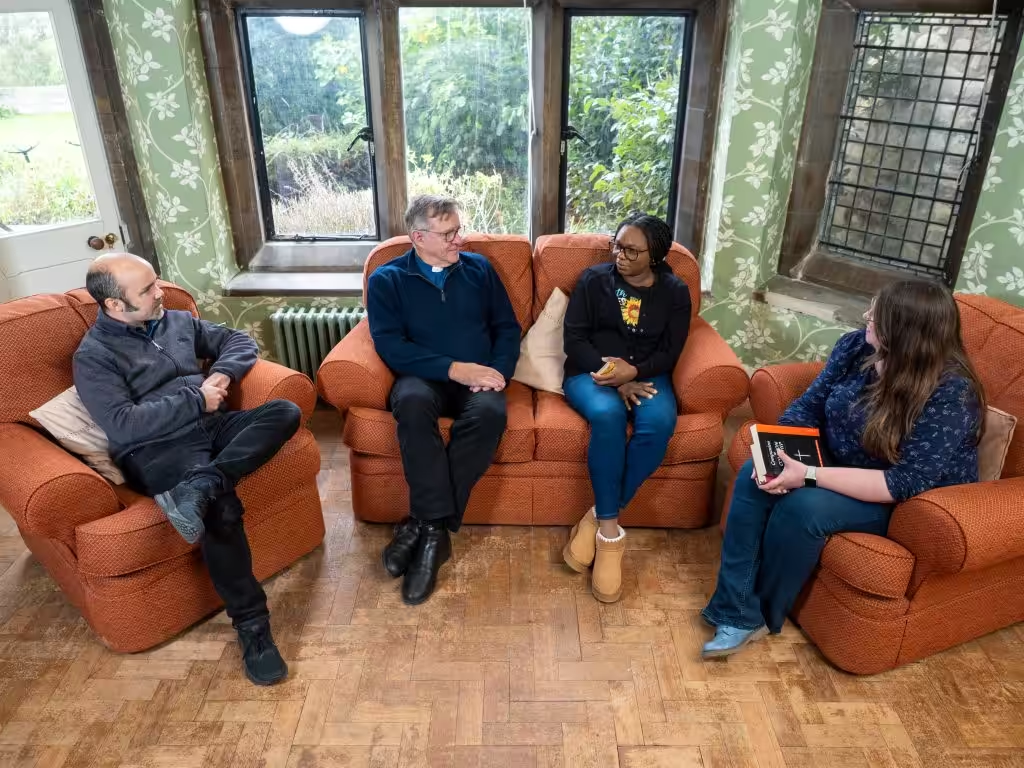
what are my options?
Full Time Contextual Training
Ordination
1 year
16-20 hours/week mission
20 hours/week study
Full-time contextual training is the fastest-growing mode of ordination training in the Church of England. Over 75 people have now trained with St Hild College by this route.
Mission
Every St Hild ordinand is engaged with mission in a local context.
Full-time ordinands spend 16-20 hours/week developing new ministry alongside an experienced practitioner, supported by regular group reflection time. Ordinands also undertake at least one shorter additional placement to give experience of a contrasting context or area of ministry.
Study
Full time ordinands – and self-supporting ordinands on our Intensive Pathway – spend 20 hours/week studying towards an undergraduate or postgraduate award, with additional academic time possible depending on their individual study pathway.
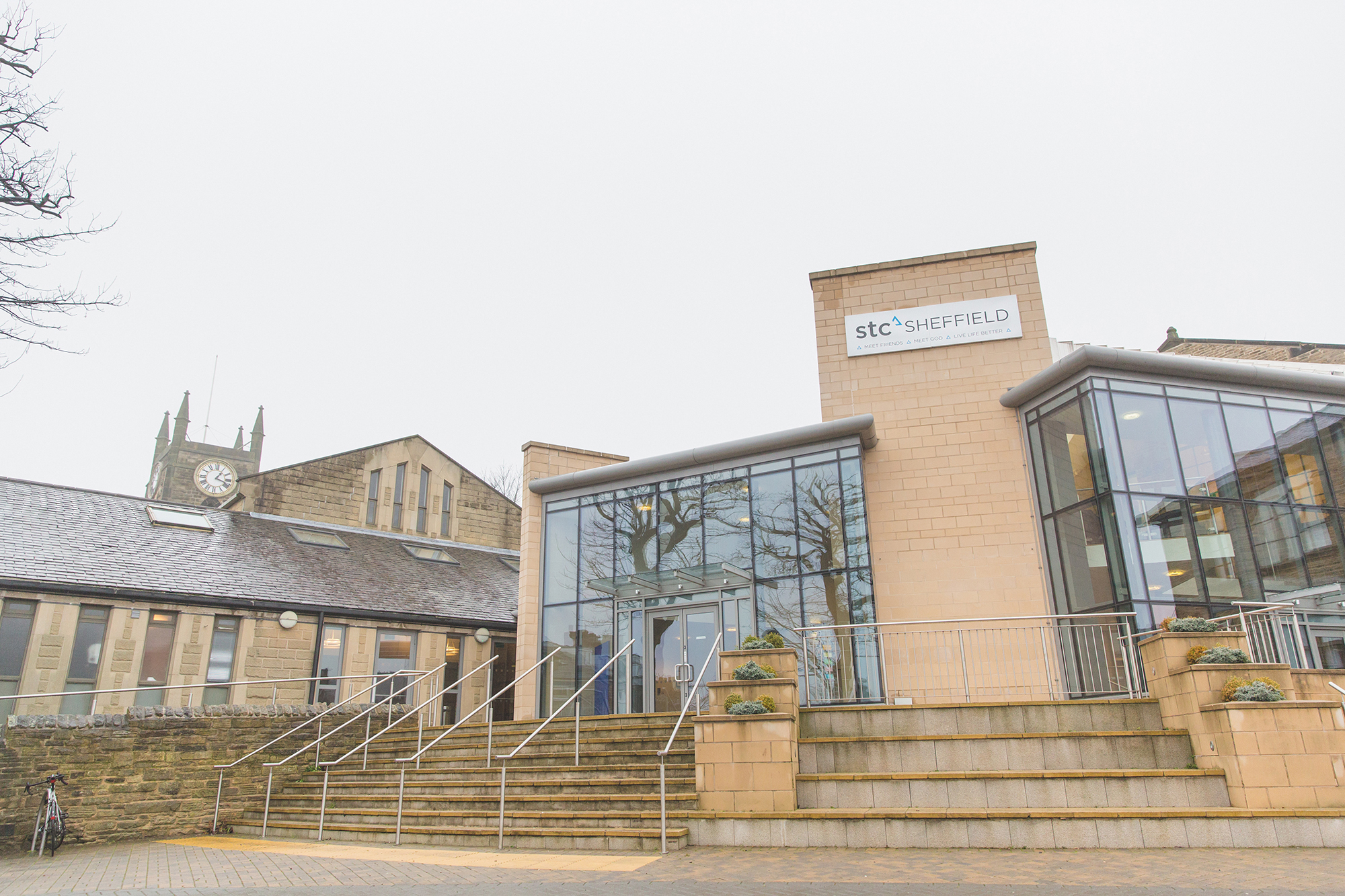
Weekly study at one of our centres:
- St Hild Sheffield (Monday daytime);
- St Hild Mirfield (Wednesday evenings);
- St Hild Lincoln (Saturdays and Thursdays both online and/or in person);
- St Hild Online (Thursday evenings, plus additional face-to-face seminars) and dedicated study time in the week.
Prayer
- Our ordinand community gathers each year for six residential weekends at Mirfield and one Easter week at Durham.
- This is crucial formational time for worship, prayer, shared meals, study and retreat.
- Ordinands journey through training as part of a Prayer Group for mutual accountability and personal growth.
- All ordinands are encouraged to have a spiritual director.
For further information:
Assessment information
More information about academic study and assessment can be found on the Durham-accredited awards pages:
Full-time training with St Hild is a great opportunity to listen and learn from context: rigour, prayer and action woven together, with enabling support all the way.”
Rt Rev Helen-Ann Hartley, Bishop of Newcastle
Part Time Contextual Training
Ordination
How many years?
?? hours/week mission
10-12 hours/week study
Mission
10-12 hours/week developing new ministry alongside an experienced practitioner, supported by regular group reflection time.
Every St Hild ordinand is engaged with mission in a local context. For part-time ordinands this usually means remaining rooted and active in their home parish for much of their time in training, but taking some time away from home-parish commitments for a missional placement from Advent to Easter of their first year, and a second-year placement in a different area of ministry or in an international context.
Study
Ordinands are based at Mirfield, Lincoln, Sheffield or Online for weekly study.
Part-time ordinands normally need to set aside 10-12 hours per week for additional study.
Self-supporting ordinands on our Intensive Pathway study for 20 hours each week with additional academic time possible, depending on their individual study pathway.
Prayer
Our ordinand community gathers each year for six residential weekends at Mirfield and one Easter week at Durham.
This is crucial formational time for worship, prayer, shared meals, study and retreat.
Ordinands journey through training as part of a Prayer Group for mutual accountability and personal growth.
All ordinands are encouraged to have a spiritual director.
Assessment information
More information about academic study and assessment can be found on the Durham-accredited awards pages:
Practical Questions
You will be able to ask anything you want in the interview, but here are some answers to questions our prospective student often ask:
How does academic study work alongside ministry in a local context?
- All forms of training for ministry include some placement experience, but at St Hild involvement in mission is at the heart of training.
- Many students have said that this balance of learning and doing helps motivate them in their academic work, keeping it grounded and enabling transformative theological reflection.
- Students on this pathway tend to achieve very well academically, according to the appropriate level for them, with some going on to further academic research or teaching in their field.
- Our study pathways are flexible in order to work alongside contextual experience. While some modules focus on the classic academic disciplines, other modules overlap with placement experience so that ministry is enriched by study and reflection in context is acknowledged and accredited.
- For students requiring additional learning support, or on our theological educator pathway, additional study time can be provided.
What support is there for me and my family?
Every full-time contextual ordinand has a dedicated St Hild Core Tutor who oversees the arrangement and ongoing review of their context.
Full-time ordinands also meet monthly with a peer group for contextual reflection as part of our formation programme.
All our ordinands are part of a prayer group and the wider St Hild community of support, prayer and mission.
In their context, each full-time contextual ordinand has a placement supervisor who is responsible for effective learning and growth, and regular theological reflection. The local context is a place of community and support for ordinands and, where appropriate, for their families.
In our experience, full-time contextual ordinands grow significantly in their capacity to manage complexity, connect with support structures, and flourish in a local context – all of this prepares them well for curacy and future ministry.
What exactly will I study?
- Your academic programme of study will be decided by St Hild in conversation with you.
- We do not have a ‘one size fits all’ study programme but will work to identify the best route for you based on your prior study and experience, the nature of your vocation, and in response to any particular training needs identified.
- You might study towards an undergraduate, graduate or post-graduate award over two or three years, completing anything from the Common Awards suite which includes the Higher Education Diploma, BA, Graduate or Post-Graduate Diploma, or MA. See Durham Common Awards here.
- Whatever your academic programme, a significant portion of it will relate to reflecting on what you are learning through experience, both in your placement/s and in the shared life of worship and prayer.
- Studies are organised in modules which carry ten or twenty credits; the typical programme of study is made up of between 80 and 120 credits per academic year.
- More traditional academic studies will include modules in biblical study, church tradition (including worship and doctrine), and ministry and mission.

explore your options
Durham-accredited Awards
We have a large diversity of awards, courses and pathways to study at St Hild, and it can be confusing trying to work out which one is right for you.Below are the different options for Anglican Formation, with information you may find helpful for making that step, but we encourage you to Book a Conversation…
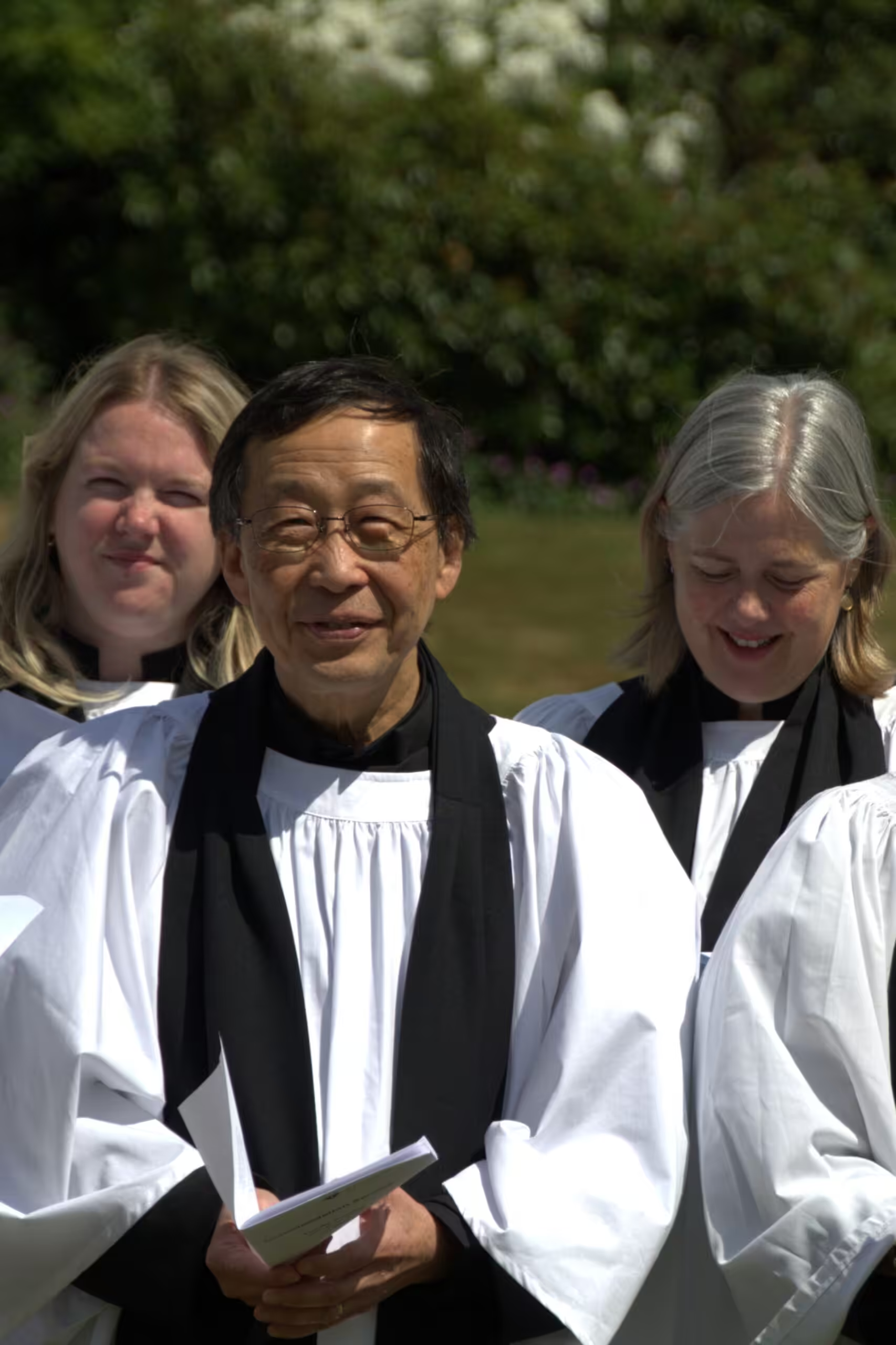
The Elizabeth Pathway
The Elizabeth Pathway is a new Anglican ordination training pathway for older, experienced lay leaders.
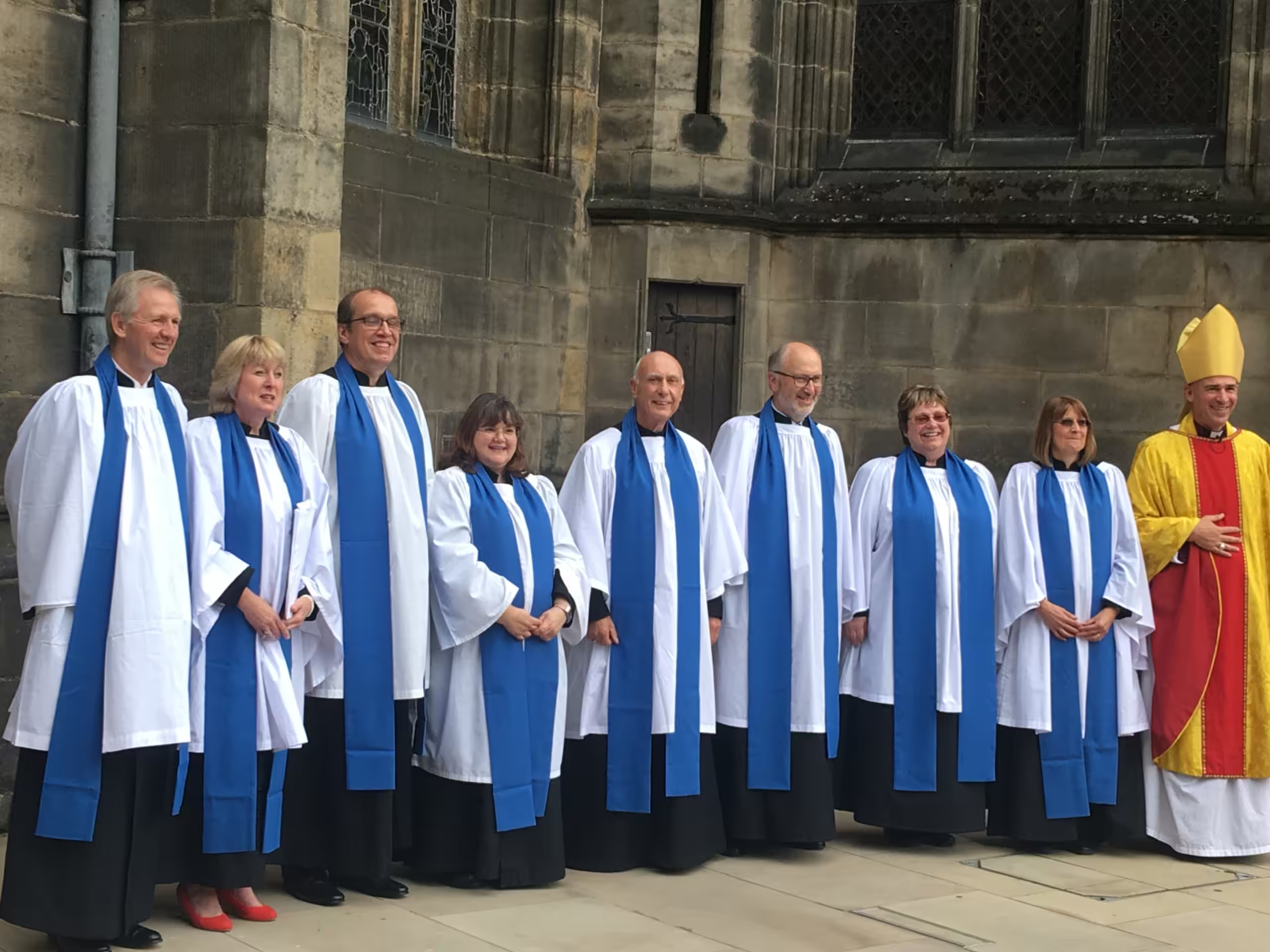
Licensed Lay Training
Training for those who feel called to Licensed Reader Ministry within the Church of England
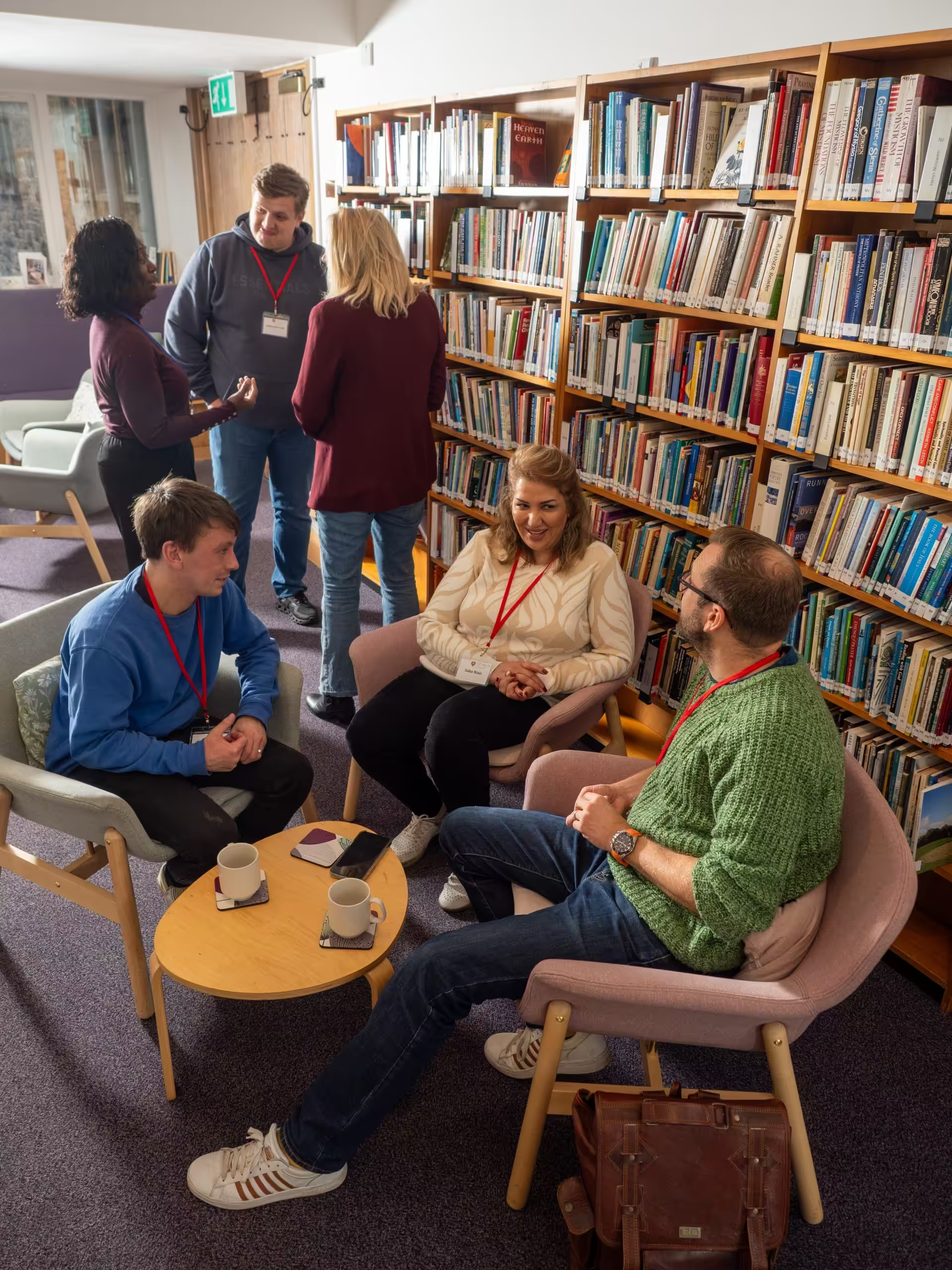
Alternative Learning Pathways
Our study pathways are flexible in order to work alongside contextual experience.
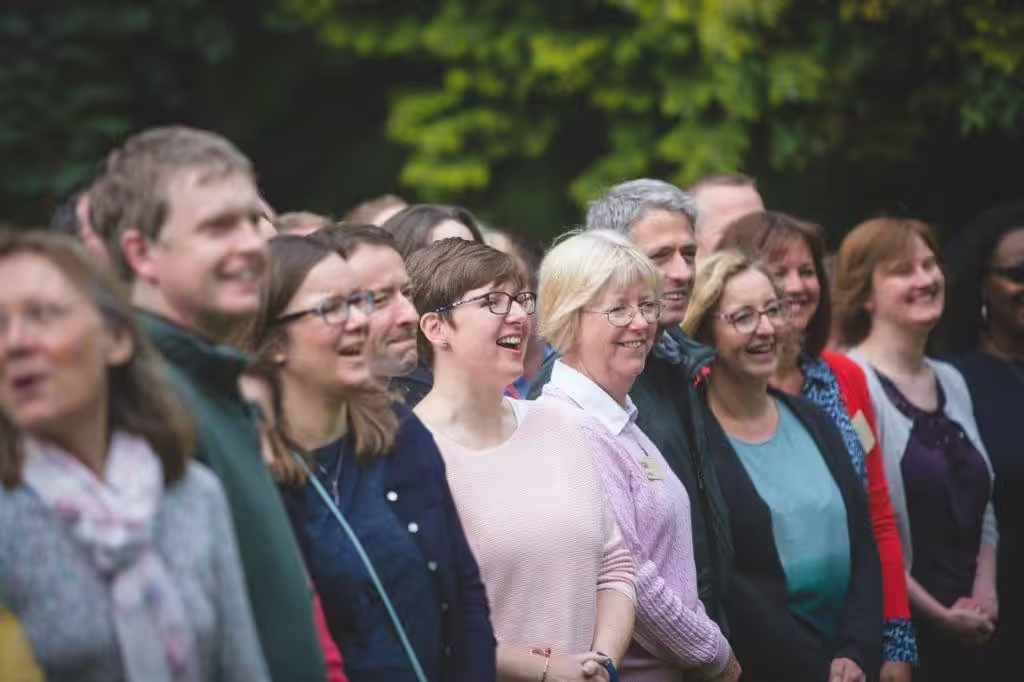
Mirfield Residential Contextual Pathway
This residential context offers ordinands the change to be part of the College of the Resurrection in Mirfield as they study, pray and prepare for ordination